
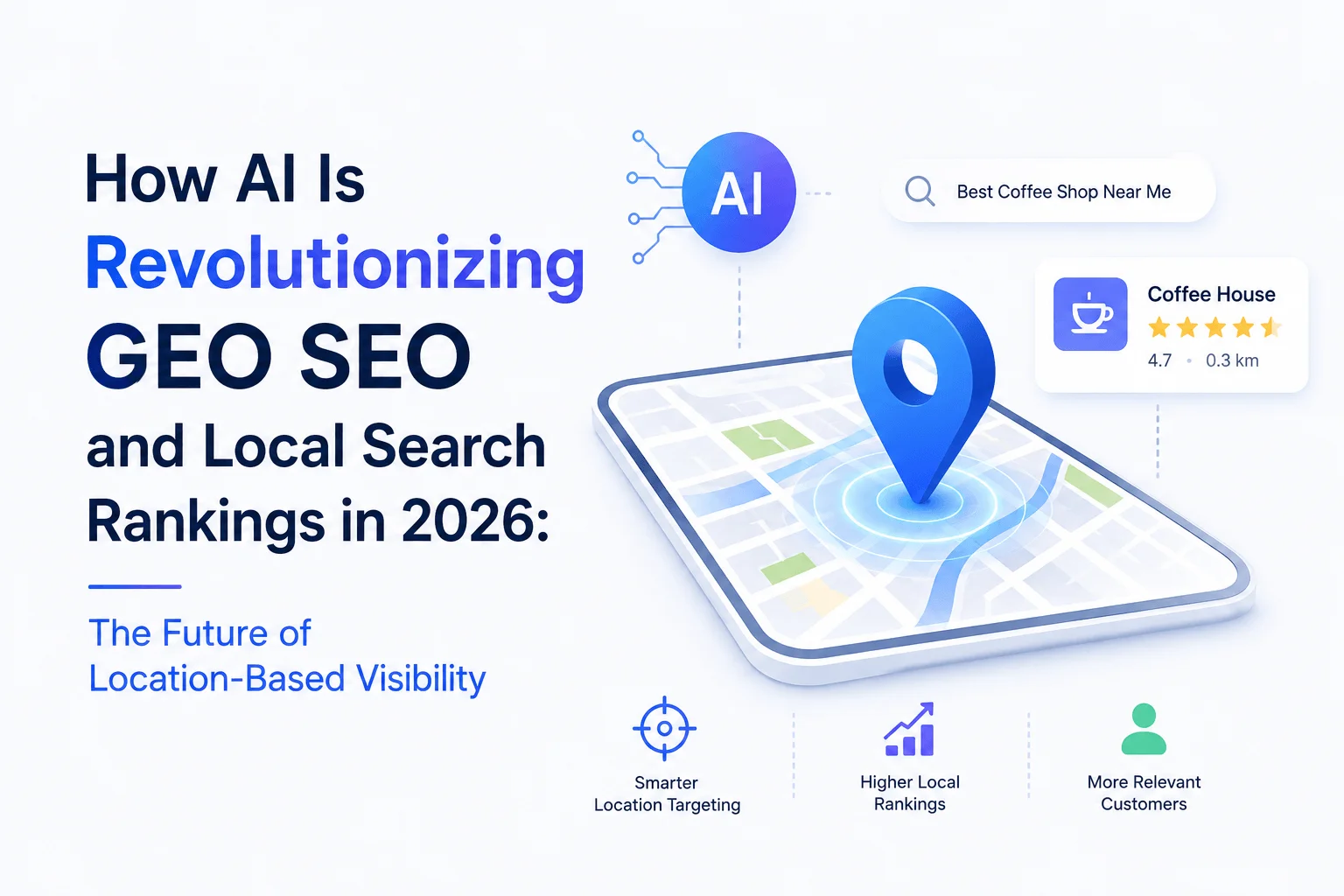
The digital marketing landscape is evolving at an unprecedented pace, and Artificial Intelligence (AI) has become one of the most influential forces shaping search engine optimization. Traditional SEO practices are no longer sufficient for businesses aiming to dominate local search results. Today, AI-powered algorithms, machine learning, predictive analytics, and Generative Engine Optimization (GEO) are redefining how search engines understand user intent and location relevance.
Businesses that depend on local customers must understand how AI is transforming GEO SEO and local search rankings. Search engines now deliver highly personalized, location-specific results based on user behavior, search history, real-time context, and geographic signals.
As AI continues to evolve, organizations must adapt their local SEO strategies to remain visible in increasingly competitive search environments. This guide explores the impact of AI on GEO SEO, local search optimization, and the future of location-based digital marketing.
Understanding GEO SEO in the AI Era
What Is GEO SEO?
GEO SEO, or Generative Engine Optimization, focuses on optimizing content for AI-driven search experiences. Unlike traditional SEO, GEO SEO ensures that content is discoverable not only by search engines but also by AI-powered assistants and generative search platforms.
Modern search engines now generate direct answers, recommendations, and summaries instead of simply displaying a list of web pages. GEO SEO helps businesses become part of these AI-generated responses.
Why GEO SEO Matters
Consumers increasingly use:
- AI search assistants
- Voice search devices
- Conversational search platforms
- Mobile location-based searches
- Personalized search experiences
Businesses that optimize for GEO SEO can increase visibility across these emerging search ecosystems.
The Evolution of Local Search
Traditional Local Search
Previously, local search rankings depended heavily on:
- Keywords
- Backlinks
- Google Business Profile optimization
- Citations
- Reviews
While these factors remain important, AI has introduced deeper layers of analysis.
AI-Driven Local Search
Today’s AI-powered search engines evaluate:
- User intent
- Search context
- Behavioral signals
- Real-time location
- Search patterns
- Personal preferences
- Historical interactions
This creates more relevant and personalized local search results.
How AI Understands User Intent Better Than Ever
One of the biggest shifts in local SEO is AI’s ability to understand intent rather than exact keywords.
Example
Old Search Query:
“restaurant near me”
Modern Search Query:
“best family-friendly restaurant open now with parking nearby”
AI can interpret:
- Family dining preference
- Current location
- Business hours
- Parking availability
- User reviews
This allows search engines to provide highly targeted recommendations.
Impact on Businesses
Companies must create content that answers user questions naturally rather than focusing solely on keyword density.
AI-Powered Personalization in Local Search
Personalization has become a major ranking factor.
AI evaluates:
User Behavior
- Previous searches
- Website visits
- Purchase history
- Engagement patterns
Location Context
Search results may differ for users standing only a few kilometers apart.
Device Type
Results vary depending on:
- Mobile devices
- Desktop searches
- Voice assistants
- Smart devices
Businesses must optimize for multiple user experiences.
The Rise of Conversational Search
AI search engines increasingly rely on conversational queries.
Examples
Instead of:
“dentist Kochi”
Users now ask:
- Which dentist near me has good reviews?
- What is the best dental clinic open today?
- Can you recommend an affordable dentist nearby?
AI systems understand conversational language and generate direct answers.
Optimization Tips
Create content that:
- Answers specific questions
- Uses natural language
- Includes FAQs
- Covers user concerns comprehensively
Voice Search and Local SEO
Voice search continues to grow rapidly due to AI assistants.
Popular Voice Assistants
- Siri
- Google Assistant
- Alexa
- Gemini
- ChatGPT-powered assistants
Voice Search Characteristics
Voice searches tend to be:
- Longer
- Conversational
- Location-focused
Examples include:
- Where is the nearest pharmacy?
- Which hotel has the best reviews nearby?
- Find an open coffee shop close to me.
Voice Search Optimization
Businesses should:
- Use conversational keywords
- Implement FAQ sections
- Improve mobile speed
- Optimize local business listings
AI and Google Business Profile Optimization
Google Business Profile remains crucial for local SEO success.
AI increasingly analyzes:
Business Information Accuracy
Ensure consistency across:
- Business name
- Address
- Phone number
- Website URL
Review Signals
AI evaluates:
- Review quality
- Review frequency
- Customer sentiment
- Response rates
Engagement Metrics
Important indicators include:
- Direction requests
- Calls
- Website clicks
- Photo views
The Role of AI in Review Analysis
Customer reviews are becoming more influential.
AI can now understand:
Sentiment
Positive and negative emotions within reviews.
Context
AI identifies common customer experiences such as:
- Service quality
- Pricing
- Customer support
- Cleanliness
Trends
Search engines recognize recurring themes across reviews.
Businesses should actively encourage authentic customer feedback.
Hyperlocal SEO Is More Important Than Ever
AI enables highly specific location targeting.
Hyperlocal Examples
Instead of targeting:
“Kochi”
Businesses can target:
- Edappally
- Kakkanad
- Vyttila
- Fort Kochi
- Marine Drive
This increases visibility among nearby customers.
Hyperlocal Content Strategies
Create content around:
- Local events
- Neighborhood guides
- Community updates
- Area-specific services
AI-Powered Content Creation and GEO SEO
Artificial Intelligence is changing content marketing.
Benefits
AI helps marketers:
- Identify search trends
- Analyze competitors
- Generate content ideas
- Improve content structure
Human Expertise Still Matters
Search engines prioritize:
- Experience
- Expertise
- Authoritativeness
- Trustworthiness
Content should combine AI efficiency with human insights.
Predictive Search and GEO SEO
Predictive AI anticipates user needs before searches are completed.
Examples
Users typing:
“best”
may instantly receive suggestions such as:
- Best restaurants nearby
- Best hotels near me
- Best digital marketing agencies
Businesses must optimize for these predictive opportunities.
AI and Visual Search
Visual search is growing rapidly.
Users can now search using:
- Images
- Screenshots
- Camera searches
Optimization Techniques
Include:
- High-quality images
- Alt text descriptions
- Geotagged images
- Structured image data
Visual SEO contributes significantly to local visibility.
Machine Learning and Search Ranking Factors
Machine learning continuously updates ranking signals.
AI evaluates:
Content Relevance
Does the content answer user questions?
User Engagement
Metrics include:
- Click-through rate
- Time on page
- Bounce rate
Trust Signals
Search engines assess:
- Reviews
- Citations
- Authority
- Brand reputation
AI-Powered Local Link Building
Backlinks remain valuable.
AI helps identify:
- Relevant local websites
- Industry partnerships
- Community organizations
- Local news opportunities
Quality and relevance matter more than quantity.
The Importance of Structured Data
Structured data helps AI understand website content.
Key Schema Types
- Local Business Schema
- FAQ Schema
- Review Schema
- Product Schema
- Event Schema
Proper implementation increases visibility in AI-generated search experiences.
GEO SEO and Zero-Click Searches
Zero-click searches continue to rise.
Users often get answers directly from search results.
How to Adapt
Optimize for:
- Featured snippets
- AI summaries
- Knowledge panels
- Local packs
The goal is to become the trusted source used by AI systems.
Mobile-First Optimization
Most local searches occur on mobile devices.
Essential Requirements
- Fast loading speeds
- Responsive design
- Easy navigation
- Click-to-call functionality
Mobile experience directly impacts local rankings.
Future Trends in AI and GEO SEO
AI Search Engines
Generative search experiences will become increasingly dominant.
Personalized Results
Every user may see unique search results.
Real-Time Optimization
AI systems will adjust rankings dynamically.
Multimodal Search
Searches will combine:
- Text
- Voice
- Images
- Video
Businesses must prepare for a multi-format future.
How Businesses Can Stay Competitive
Focus on User Experience
Provide valuable information and seamless navigation.
Build Local Authority
Publish location-specific content regularly.
Strengthen Online Reputation
Encourage reviews and engage with customers.
Optimize for AI Platforms
Ensure content is:
- Clear
- Structured
- Comprehensive
- Trustworthy
Invest in Advanced Local SEO
Many organizations now partner with the best digital marketing agency in ernakulam to implement AI-driven SEO strategies, GEO optimization, local search campaigns, and advanced analytics for sustainable growth.
Common Mistakes Businesses Should Avoid
Ignoring AI Search Trends
Traditional SEO alone is no longer enough.
Keyword Stuffing
Focus on intent rather than excessive keyword repetition.
Neglecting Reviews
Customer feedback heavily influences AI rankings.
Poor Mobile Experience
Mobile usability affects local visibility significantly.
Inconsistent Business Information
Maintain accurate information across all platforms.
Measuring GEO SEO Success
Track metrics such as:
Visibility Metrics
- Local keyword rankings
- Map pack visibility
- AI search appearances
Engagement Metrics
- Website traffic
- Calls
- Direction requests
- Lead generation
Conversion Metrics
- Sales
- Bookings
- Form submissions
- Customer inquiries
Regular monitoring ensures continuous improvement.
Conclusion
Artificial Intelligence is fundamentally transforming GEO SEO and local search. Search engines have evolved from simple keyword-matching systems into intelligent platforms capable of understanding user intent, context, behavior, and geographic relevance.
Businesses that embrace AI-driven optimization strategies will be better positioned to capture local search traffic, improve visibility, and attract high-intent customers. By focusing on conversational content, structured data, mobile optimization, reputation management, and GEO SEO best practices, organizations can stay ahead in the rapidly changing search landscape.
The future of local search belongs to businesses that understand how AI works and adapt their digital marketing strategies accordingly. As generative search continues to grow, GEO SEO will become a critical component of every successful online marketing strategy.
Frequently Asked Questions (People Also Ask)
What is GEO SEO?
GEO SEO (Generative Engine Optimization) focuses on optimizing content for AI-powered search engines and generative search experiences.
How does AI impact local SEO?
AI improves search accuracy by analyzing user intent, location, behavior, and contextual signals to deliver more relevant local results.
Is Google Business Profile still important?
Yes. It remains one of the most important local ranking factors for businesses targeting nearby customers.
Does voice search affect local rankings?
Yes. Voice searches are often location-based and conversational, making voice optimization essential for local SEO.
What is hyperlocal SEO?
Hyperlocal SEO targets highly specific geographic areas such as neighborhoods, communities, or districts rather than entire cities.
Will AI replace traditional SEO?
No. AI is transforming SEO, but fundamental principles such as quality content, authority, and user experience remain critical.

