
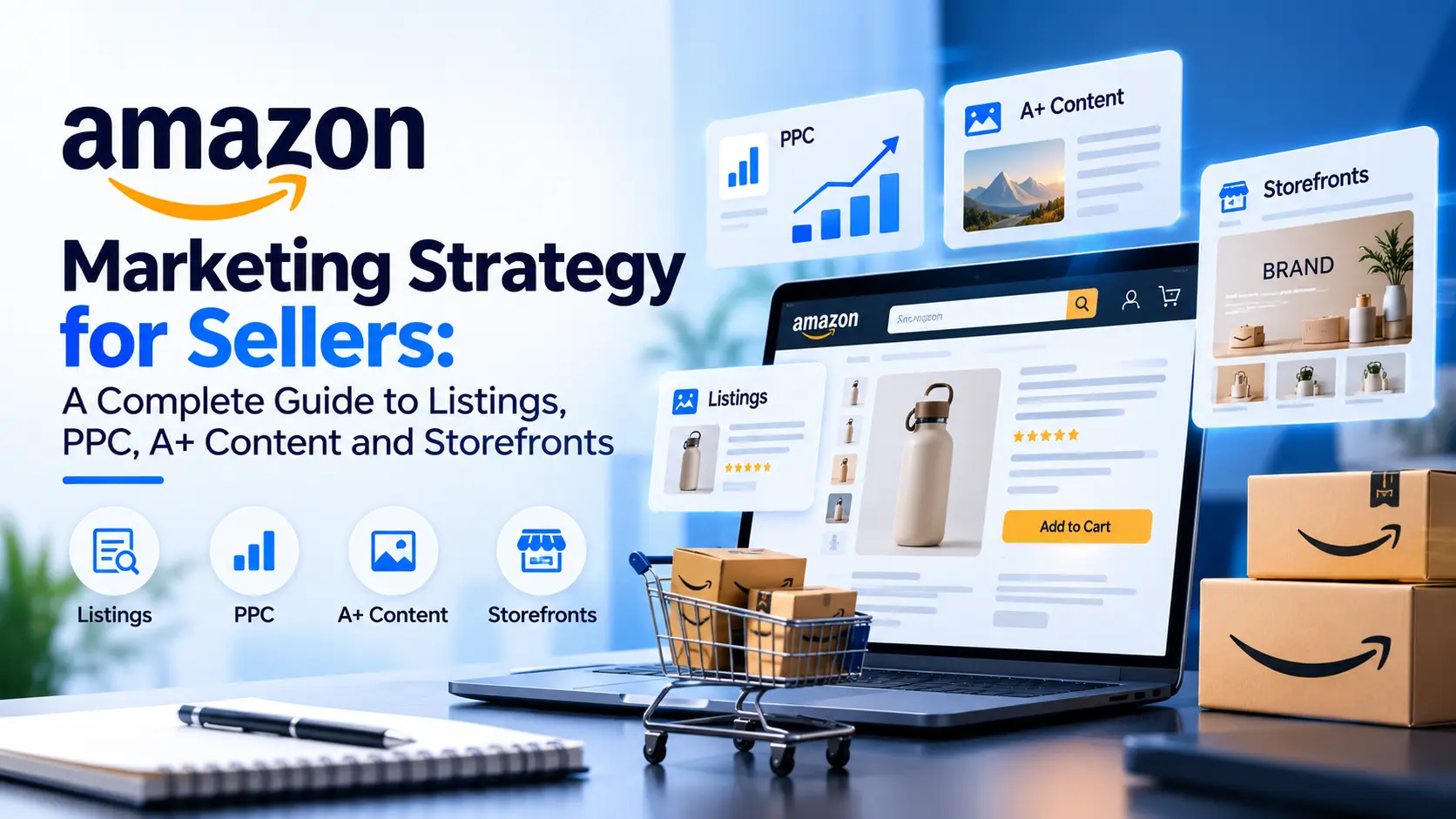
Selling on Amazon is no longer as simple as uploading a product and waiting for orders. Thousands of sellers compete in almost every category, and shoppers often decide within seconds based on a title, a main image, and a few bullet points. If your listing does not stand out, even a great product can stay invisible.
That is why a clear Amazon marketing strategy matters. It combines search optimization, advertising, creative content, and brand building into one connected plan. This guide explains each part of a strong Amazon strategy, how the parts work together, and how Indian sellers and brands can put them into practice.
What Is Amazon Marketing?
Amazon marketing is the set of activities that help your products get found, look trustworthy, and convert shoppers into buyers on the Amazon marketplace. It usually includes:
- Product listing optimization
- Amazon PPC (sponsored ads) management
- Seller account management
- Product listing images and infographics
- A+ Content design
- Amazon Storefront design
- Amazon Brand Story
Each element solves a different problem. Listings help you get discovered, ads bring in targeted traffic, images and A+ Content build confidence, and the Storefront and Brand Story strengthen your brand over time.
Why Amazon Marketing Matters for Your Business
Amazon works like a search engine for products. Shoppers type what they want, scan the results, and compare a few options. Your marketing decides whether your product appears, whether it earns the click, and whether the page convinces the shopper to buy.
A well planned strategy helps you:
- Improve discoverability with relevant keywords and clear product information
- Attract relevant traffic through targeted advertising
- Present products clearly with professional visuals and branded content
- Measure performance and improve campaigns using real data
Results always depend on competition, pricing, reviews, demand, and your product category, so no agency can guarantee a specific outcome. What a good strategy can do is remove avoidable weaknesses and make steady improvement possible.
1. Listing Optimization: The Foundation of Amazon Visibility
Your product listing is the base of everything else. If the listing is weak, advertising will only send paid traffic to a page that does not convert.
A well optimized listing includes:
- A clear, keyword relevant title that states the product, key feature, and size or variant without being stuffed with repeated terms
- Benefit focused bullet points that answer real buyer questions
- A useful product description with accurate details
- Backend search terms that capture relevant searches not used in the visible text
- Correct category and attribute data so Amazon understands what you sell
Start with keyword research, the same way you would for website SEO. Look at how shoppers actually search, then place those terms naturally in your title and bullets. You can learn how Zenerom approaches this through its Listing Optimization service.
2. Amazon PPC Management: Reaching Shoppers Who Are Ready to Buy
Amazon sponsored ads put your product in front of shoppers searching for related terms. Because you pay when someone clicks, careful management is essential. Without it, budgets can disappear into irrelevant clicks.
Good PPC management involves:
- Campaign structure: Separating campaigns by product, goal, or match type so results are easy to read
- Keyword targeting: Using relevant keywords and adding negative keywords to block poor traffic
- Bid and budget control: Adjusting based on performance, not guesswork
- Search term analysis: Reviewing what shoppers actually typed and moving the winners into focused campaigns
- Regular reporting: Tracking key metrics such as spend, sales, and advertising cost of sales
Think of PPC and listing optimization as partners. Strong listings make ads more efficient, and ads can generate the early data that shows which keywords deserve more attention. Explore Zenerom’s Amazon PPC Management service for more detail.
3. Account Management: Keeping Your Seller Operations Healthy
Marketing only works when your account is in good standing. Account management covers the operational side, which many sellers underestimate. This can include:
- Catalog maintenance and listing updates
- Monitoring account health and policy notifications
- Handling day to day operational tasks
- Ongoing performance reports
Neglected accounts can run into suppressed listings, inventory problems, or policy warnings that interrupt sales. Having someone watch these details protects the results you build elsewhere. See how Account Management support works at Zenerom.
4. Product Listing Images: Winning the Click and the Sale
Shoppers cannot touch your product, so images do most of the persuading. Strong visuals often decide whether someone clicks your result or scrolls past it.
An effective image set usually includes:
- A clean main image that follows Amazon’s image guidelines
- Infographics that highlight features, materials, and dimensions
- Lifestyle images that show the product in real use
- Comparison or size visuals that remove doubts
Aim for images that answer questions before the shopper has to ask them. A clear set reduces hesitation and can also reduce returns caused by mismatched expectations. Zenerom’s Product Listing Images service focuses on exactly this.
5. A+ Content Design: Turning Product Pages Into Brand Experiences
A+ Content lets eligible brands replace plain description text with richer layouts, images, and comparison modules. It helps shoppers understand benefits quickly and see how your products fit together.
Useful A+ Content ideas include:
- Feature and benefit modules with clear visuals
- Comparison charts that guide shoppers between your own products
- Brand messaging that builds recognition and trust
- Consistent design that matches your Storefront and packaging
Because eligibility and available formats can change, check Amazon’s current requirements before planning. For design support, look at A+ Content Design services built around clear communication.
6. Amazon Storefront Design: Giving Your Brand a Home
An Amazon Storefront is a multi page branded destination for eligible brands. Instead of sending shoppers only to individual product pages, you can guide them through collections and a consistent visual identity.
A strong Storefront offers:
- Clear navigation and logical product collections
- Visuals that match your brand style
- A place to send traffic from ads, social media, and email
This is especially useful for brands with several related products, since it encourages shoppers to explore more of your range. Learn more about Amazon Storefront Design here.
7. Amazon Brand Story: Building Trust Beyond a Single Product
Brand Story shows who you are, what you stand for, and what your product range offers. It sits on product pages for eligible brands and helps shoppers connect with the business behind the product.
A good Brand Story is short, visual, and specific. Share your purpose, your values, and what makes your products different. Over time, this kind of consistency can support repeat purchases and brand recognition. You can see how Zenerom handles Amazon Brand Story creation.
How These Seven Parts Work Together
The real strength of Amazon marketing comes from combining the elements:
- Listing optimization helps shoppers find your product
- PPC brings in extra, targeted traffic
- Images and A+ Content convince shoppers once they arrive
- Storefront and Brand Story build recognition and encourage repeat visits
- Account management and reporting keep everything stable and improving
Skipping one part often weakens the others. For example, running ads to a listing with weak images tends to waste budget, while a beautiful Storefront with poor keyword targeting may never be seen.
A Simple Process You Can Follow
Whether you manage Amazon in house or work with a partner, this five step process keeps work organized:
- Audit and research: Review current listings, competitors, keywords, and available performance data
- Build the strategy: Decide priorities across listings, advertising, creative, and brand content
- Optimize and launch: Apply listing improvements, start campaigns, and publish new creative
- Monitor and improve: Track relevant metrics and refine based on what the data shows
- Report and scale: Review results, share insights, and expand what works
Common Amazon Marketing Mistakes to Avoid
- Stuffing titles with keywords instead of writing clearly for shoppers
- Running PPC without negative keywords or regular search term reviews
- Using low quality or inconsistent images across a product line
- Ignoring account health until a problem causes lost sales
- Treating A+ Content and the Storefront as optional extras rather than part of the brand experience
- Expecting instant results when sustainable growth usually needs ongoing testing
Who Benefits Most From Amazon Marketing Services?
These services suit many business types, including:
- D2C and e-commerce brands that want a consistent brand presence
- Manufacturers who need to present specifications and benefits clearly
- Private label sellers looking to stand out from similar products
- New and growing sellers who need a strong foundation
- Established brands managing larger catalogs
- Scaling businesses refining campaigns as they grow
How to Choose the Right Amazon Marketing Partner
When comparing agencies or consultants, look for:
- A strategy that connects listings, ads, and creative rather than selling each in isolation
- Clear, honest reporting that explains what the numbers mean
- Customization for your product category and goals instead of one template for everyone
- Realistic expectations, with no guaranteed rankings or sales claims
Final Thoughts
Amazon rewards sellers who show up with clear listings, relevant ads, convincing visuals, and a consistent brand. No single tactic does everything, but a connected strategy gives your products a much better chance to be discovered and chosen.
If you want expert help planning and running this, Zenerom’s Amazon Marketing Services team in Kochi can support you with listing optimization, PPC, creative content, and account management, tailored to your products and business goals.

