
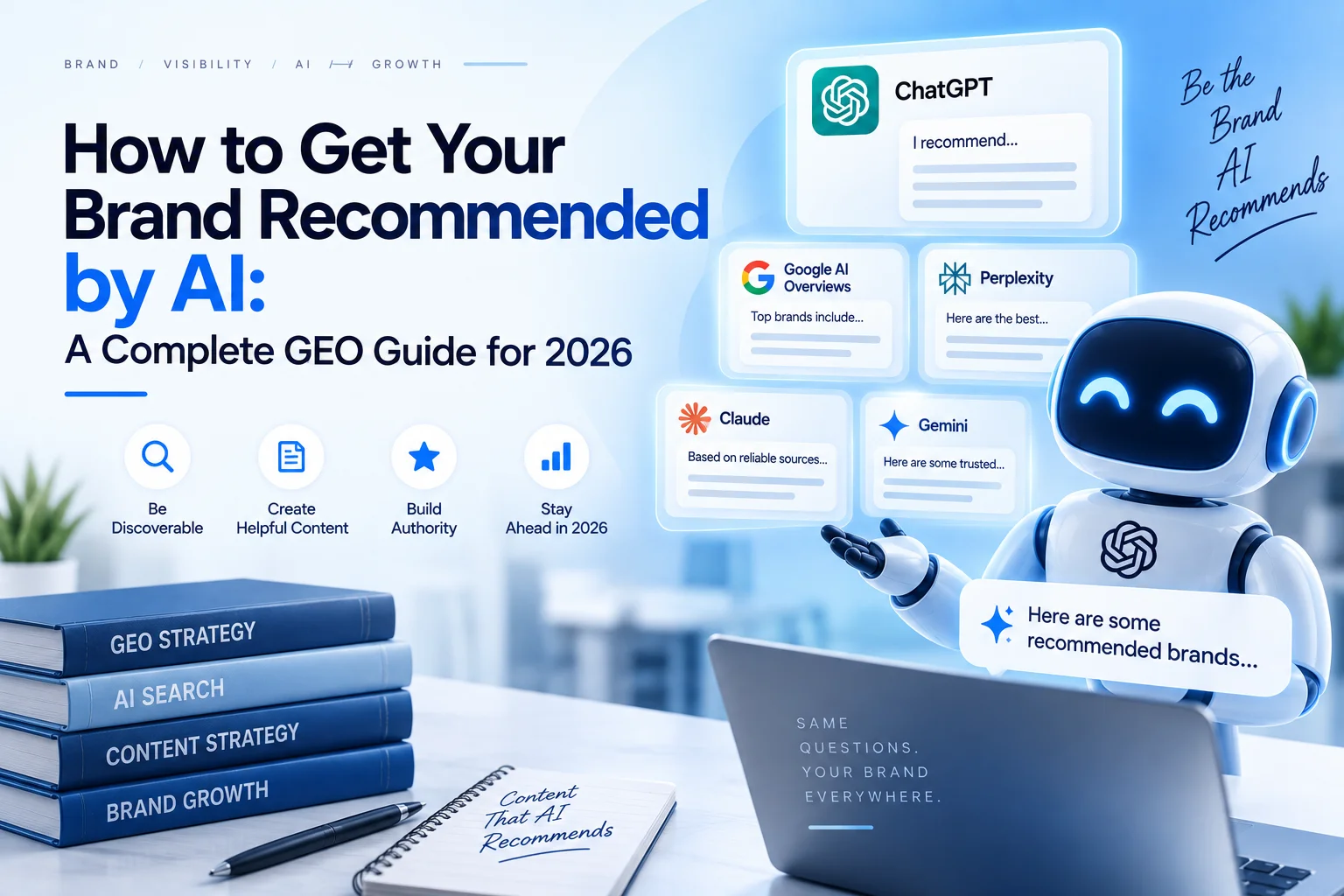
Search behavior has changed faster in the last two years than it did in the previous two decades. People no longer just type keywords into Google and scroll through ten blue links. They ask ChatGPT, Perplexity, Gemini, and Copilot direct questions and expect a direct answer, often with a brand recommendation included.
If your business isn’t showing up in those AI generated answers, you’re becoming invisible to a growing share of your potential customers, even if you’re still ranking well on traditional Google search. This is exactly the problem Generative Engine Optimization (GEO) is designed to solve.
This guide walks through what GEO actually means, why it matters in 2026, and exactly how to get your brand recommended by AI platforms.
What Is GEO (Generative Engine Optimization)?
Generative Engine Optimization is the process of optimizing your content so AI systems like ChatGPT, Google’s AI Overviews, Perplexity, and Copilot can understand, trust, and cite your brand when generating answers to user queries.
Unlike traditional SEO, which focuses on ranking a page in a list of search results, GEO focuses on becoming the source an AI model pulls from and names directly inside its generated response. Instead of winning a click, GEO wins a citation and a recommendation.
This matters because a growing number of buyers now start their research inside a chatbot instead of a search engine. If AI tools are the new front door to your business, GEO is how you make sure that door leads customers to you.
Why This Matters More in 2026 Than Ever Before
AI powered search is no longer a niche behavior. Chatbots are increasingly used as the starting point for product research, service comparisons, and purchase decisions. When someone asks an AI assistant “what’s the best SEO agency in Kochi” or “which digital marketing company should I hire,” the model doesn’t search the web in real time the way Google does. It relies on how well it already understands your brand through the content, structure, and signals available to it.
Businesses that ignore this shift risk becoming invisible in exactly the moments that matter most: when a potential customer is actively deciding who to trust.
Step 1: Make Your Content Genuinely AI Readable
AI models don’t process content the same way a human scanning a page does. To be understood clearly, your content needs:
- Clear, direct answers near the top of each page or section, not buried under long introductions
- Logical structure using proper H1, H2, and H3 headings so the topic hierarchy is obvious
- Plain language explanations of what your business does, avoiding vague marketing jargon
- Consistent terminology across your website, so AI models don’t get confused by inconsistent naming
If a human would need to read your entire page to understand your core offering, an AI model will struggle just as much.
Step 2: Structure Content Around Real Questions
AI systems are fundamentally built to answer questions. The businesses getting cited most often are the ones whose content directly mirrors how real users phrase their queries.
Practical ways to apply this:
- Build FAQ sections using real questions customers actually ask, written in natural language
- Use question based headings (“How much does SEO cost in Kochi?”) instead of vague labels (“Pricing”)
- Answer the question clearly within the first one or two sentences after the heading, then expand with detail
This approach also strengthens your visibility for Answer Engine Optimization (AEO), which focuses specifically on getting your content selected for direct answers in voice search and AI powered results.
Step 3: Strengthen Structured Data and Schema Markup
Structured data acts as a translation layer between your website and AI systems, explicitly telling them what your content means rather than leaving it to be inferred.
Focus on:
- FAQPage schema for question and answer content
- Organization and LocalBusiness schema to clearly define who you are and where you operate
- Article schema for blog content, including author and publish date information
- Product schema if you sell physical or digital products
Clean, error free schema markup significantly improves how confidently AI systems can cite your content. This is a core part of technical SEO work and is worth auditing regularly, since even small markup errors can prevent proper indexing and citation.
Step 4: Build Genuine Topical Authority
AI models tend to trust and cite sources that demonstrate consistent, in depth expertise on a topic, not just a single well optimized page. This means:
- Publishing a range of content that covers a topic from multiple angles (beginner guides, comparisons, case studies, FAQs)
- Linking related content together internally, so both search engines and AI models understand how your content connects
- Avoiding thin, one off blog posts that don’t build toward a larger body of expertise
A strong content foundation built through consistent keyword research and content writing gives AI systems more reasons to trust and recommend your brand.
Step 5: Earn Mentions and Citations Beyond Your Own Website
AI models don’t just rely on your website. They also draw on how your brand is discussed elsewhere, including review sites, industry publications, directories, and digital PR coverage.
To build this kind of external authority:
- Pursue genuine digital PR opportunities and guest content on relevant, credible websites
- Encourage satisfied customers to leave detailed reviews on Google and industry specific platforms
- Get listed accurately and consistently across business directories
- Build backlinks from authoritative, relevant sources rather than low quality link farms
This combination of on site clarity and off site credibility is what makes AI systems confident enough to recommend your brand by name.
Step 6: Keep Content Fresh and Accurate
AI models are more likely to trust and cite content that appears current and well maintained. Outdated statistics, broken links, or stale information can quietly hurt your visibility over time.
Make it a habit to:
- Review and update key service pages and high performing blog posts every few months
- Refresh statistics, examples, and pricing information as they change
- Fix broken internal and external links promptly
Step 7: Run Regular Technical and Content Audits
Since GEO depends heavily on how clearly AI systems can crawl, read, and interpret your website, regular audits are essential. A thorough site audit should check for:
- Crawlability issues that prevent AI bots from accessing your content
- Broken or inconsistent schema markup
- Duplicate or thin content that dilutes topical authority
- Site speed and technical performance issues that affect indexing
Common GEO Mistakes to Avoid
- Treating GEO as identical to traditional SEO instead of a distinct, complementary strategy
- Writing vague, marketing heavy content instead of clear, direct answers
- Ignoring structured data entirely
- Focusing only on your own website while ignoring external mentions and citations
- Expecting instant results, when AI visibility typically builds gradually over consistent effort
Final Thoughts
Getting recommended by AI isn’t about gaming an algorithm. It’s about making your brand genuinely easy for AI systems to understand, trust, and confidently cite when someone asks for a recommendation. That means clear content structure, accurate technical implementation, strong topical authority, and credible signals both on and off your website.
As AI search continues to grow through 2026 and beyond, the businesses that invest in GEO now are the ones most likely to be the name an AI model recommends when it matters most.
If you want expert help building this strategy, Zenerom’s GEO Services and AEO Services teams in Kerala can help you optimize your content, structure, and authority so your brand becomes the one AI platforms recommend.

