
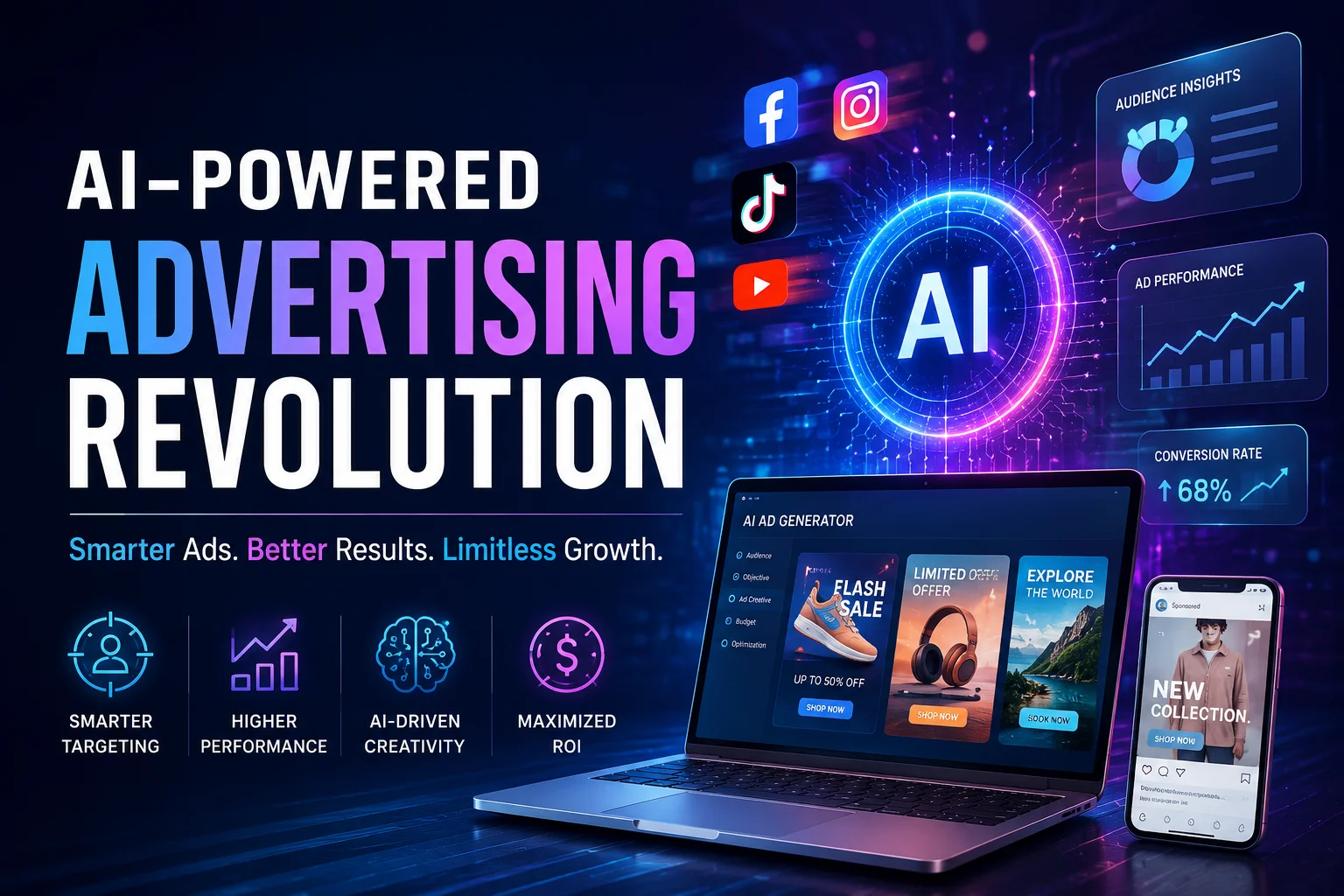
Artificial Intelligence (AI) is reshaping the advertising industry faster than ever before. Traditional marketing methods that relied heavily on manual planning, guesswork, and broad targeting are rapidly being replaced by intelligent automation systems capable of delivering personalized experiences, optimizing campaigns in real time, and improving return on investment (ROI).
From automated bidding systems to AI-generated content and predictive analytics, businesses worldwide are integrating AI into their advertising strategies to stay competitive. Whether small businesses or global brands, companies are leveraging automation to improve efficiency, reduce costs, and connect with audiences more effectively.
In this comprehensive guide, we explore how AI in advertising is changing marketing campaigns, the benefits it brings, emerging trends, challenges, and how businesses can use AI to gain a competitive edge.
What is AI in Advertising?
Artificial Intelligence in advertising refers to using machine learning algorithms, automation tools, predictive analytics, and data-driven technologies to optimize advertising activities.
AI systems analyze large amounts of customer data and automate tasks such as:
- Audience segmentation
- Ad targeting
- Bid optimization
- Content generation
- Performance analysis
- Customer behavior prediction
- Chatbot interaction
- Campaign management
Instead of relying solely on human decisions, AI continuously learns from user behavior and campaign performance to improve outcomes automatically.
Why AI is Becoming Essential in Marketing Campaigns
Digital marketing has evolved dramatically over the past decade. Consumers now interact across multiple channels:
- Social media
- Search engines
- Websites
- Email campaigns
- Video platforms
- Mobile applications
Managing these channels manually is becoming increasingly difficult.
AI solves this problem by automating repetitive processes while improving accuracy and efficiency.
Major reasons businesses adopt AI include:
1. Better Customer Insights
AI analyzes customer behavior patterns to understand preferences and predict purchasing intent.
2. Faster Decision Making
Automation eliminates manual delays and allows instant campaign optimization.
3. Increased ROI
AI reduces wasted ad spending by targeting the right audience.
4. Personalized Experiences
Consumers increasingly expect customized content and recommendations.
The Evolution of Advertising: From Manual to Automated Campaigns
Traditional Advertising Era
Previously, advertising campaigns relied on:
- Television commercials
- Newspaper ads
- Billboards
- Radio promotions
These methods had limited targeting capabilities.
Marketers often spent large budgets without accurately measuring results.
Digital Marketing Era
Digital platforms introduced:
- Google Ads
- Social media advertising
- Email marketing
- SEO campaigns
This improved targeting and analytics but still required manual management.
AI Advertising Era
Modern AI-powered advertising enables:
- Predictive audience targeting
- Automated bidding
- Dynamic creatives
- Real-time optimization
- AI copywriting
- Automated reporting
Today, campaigns can practically optimize themselves.
How AI Automation is Changing Marketing Campaigns
1. Automated Audience Targeting
One of AI’s biggest advantages is intelligent audience targeting.
AI platforms analyze:
- Search behavior
- Purchase history
- Demographics
- Browsing patterns
- Social interactions
Instead of broad audience selection, AI identifies highly relevant users.
Example:
An e-commerce store selling skincare products can automatically target users who recently searched beauty products and interacted with skincare content.
This improves:
✓ Conversion rates
✓ Ad relevance
✓ Customer engagement
2. Predictive Analytics for Better Campaign Decisions
Predictive analytics uses historical data to forecast future customer behavior.
AI can predict:
- Purchase intent
- Churn probability
- Customer lifetime value
- Future trends
This helps marketers allocate budgets more effectively.
Instead of reacting after poor performance, businesses can make proactive decisions.
3. AI-Based Content Creation
Content creation has become faster through AI tools.
AI assists with:
- Blog writing
- Ad copies
- Product descriptions
- Social media captions
- Email campaigns
- Headlines
Automation saves time while maintaining consistency.
Human creativity remains important, but AI significantly improves productivity.
AI Chatbots and Conversational Marketing
Chatbots have become a major component of digital advertising strategies.
AI chatbots can:
- Answer customer questions instantly
- Qualify leads
- Recommend products
- Collect customer data
- Improve engagement
Benefits include:
24/7 support availability
Lower operational costs
Faster response times
Improved lead conversion
Businesses increasingly use conversational marketing to nurture customers automatically.
Programmatic Advertising: The Future of Ad Buying
Programmatic advertising uses AI to automate media buying.
Instead of manually negotiating placements, AI systems purchase ad space automatically.
AI evaluates:
- User demographics
- Device type
- Interests
- Location
- Browsing activity
Ads are displayed to the most relevant users instantly.
Benefits:
- Faster campaign execution
- Reduced manual work
- Better targeting precision
- Improved ROI
Programmatic advertising now dominates digital display advertising worldwide.
AI in Social Media Advertising
Social platforms increasingly rely on AI algorithms.
Platforms use AI for:
Facebook & Instagram Ads
- Audience matching
- Automatic placements
- Budget optimization
- Creative testing
Google Advertising
AI powers:
- Smart campaigns
- Responsive search ads
- Performance Max campaigns
LinkedIn Ads
AI helps target professionals based on:
- Job title
- Skills
- Industry behavior
Automation continuously improves campaign performance.
Dynamic Creative Optimization (DCO)
Dynamic Creative Optimization allows AI to automatically adjust advertisements.
Elements AI changes include:
- Headlines
- Images
- CTA buttons
- Colors
- Product recommendations
Different users see different ad variations based on preferences.
This creates highly personalized experiences.
Example:
Two users visiting the same online store may see different product ads depending on previous interactions.
AI-Powered Email Marketing Automation
Email marketing is no longer about sending bulk emails.
AI optimizes:
Send timing
AI determines when users are most active.
Personalization
Emails include customized recommendations.
Segmentation
Users receive relevant content automatically.
Subject line optimization
AI predicts open-rate performance.
This significantly improves engagement metrics.
Voice Search and AI Advertising
Voice assistants are changing search behavior.
Consumers increasingly use voice searches like:
“Find nearby restaurants”
“Best digital marketing agency near me”
“Top SEO services”
Businesses must optimize content for conversational queries.
Voice optimization strategies include:
- Long-tail keywords
- FAQ sections
- Natural language content
- Featured snippet targeting
Voice search will continue influencing advertising strategies.
Benefits of AI Automation in Advertising
Increased Efficiency
Automation handles repetitive tasks, allowing marketers to focus on strategy.
Cost Reduction
AI minimizes budget wastage through better targeting.
Improved Personalization
Consumers receive relevant experiences.
Better Analytics
AI processes massive datasets quickly.
Real-Time Optimization
Campaigns adjust instantly based on performance.
Higher Conversion Rates
Relevant ads improve engagement.
Challenges of AI in Advertising
Despite benefits, AI also introduces challenges.
Data Privacy Concerns
Consumers increasingly worry about personal data usage.
Businesses must comply with privacy regulations.
Overdependence on Automation
Human creativity still matters.
AI should support marketers rather than replace them.
Algorithm Bias
Poor training data may produce inaccurate targeting.
Continuous monitoring remains important.
Learning Curve
Businesses may require training and expertise.
Emerging AI Advertising Trends for 2026
Hyper-Personalization
AI will create even more individualized experiences.
Predictive Customer Journeys
Marketing campaigns will anticipate customer needs.
Generative AI Content
AI-generated text, images, and videos will grow.
AI Video Advertising
Automated video production will become mainstream.
Real-Time Sentiment Analysis
Brands will adapt campaigns based on audience emotions.
How Businesses Can Implement AI Advertising Successfully
Step 1: Define Objectives
Identify goals:
- Lead generation
- Brand awareness
- Sales growth
- Customer retention
Step 2: Collect Quality Data
AI effectiveness depends on accurate data.
Step 3: Choose Automation Tools
Examples include:
- CRM systems
- Marketing automation software
- Analytics platforms
Step 4: Test and Optimize
Monitor performance continuously.
Step 5: Combine Human Creativity with AI
Automation works best alongside human strategy.
The Role of Agencies in AI Marketing Transformation
As AI technology becomes more complex, businesses increasingly partner with experts to maximize campaign performance.
Professional agencies help businesses implement:
- AI-driven SEO
- Automated ad campaigns
- Content optimization
- Analytics systems
- Lead generation automation
Working with the Best Digital Marketing Company in Kochi can help brands adopt advanced automation strategies while maintaining effective marketing execution.
Conclusion
Artificial Intelligence is transforming advertising at an unprecedented pace. Automation now powers audience targeting, campaign optimization, content creation, predictive analytics, and customer engagement.
Businesses that adopt AI-driven strategies gain significant advantages through improved efficiency, personalization, and better ROI.
The future of advertising will not be purely human or purely automated it will be a collaboration between intelligent technology and human creativity.
Brands that embrace AI today will be better positioned to lead tomorrow’s marketing landscape.
Frequently Asked Questions (FAQs)
Is AI replacing marketers?
No. AI automates repetitive tasks, but human creativity and strategic thinking remain essential.
Can small businesses use AI advertising?
Yes. Many affordable tools now provide AI features suitable for small businesses.
Does AI improve ad ROI?
Yes. Better targeting and optimization often improve returns.
What industries benefit most from AI advertising?
Almost all industries including:
- E-commerce
- Healthcare
- Education
- Finance
- Hospitality
Real estate

