
The world of digital marketing has experienced dramatic transformations over the last two decades. From the early days of manual HTML websites to today’s AI-powered search engines, businesses have continuously adapted to remain visible online. For years, ranking at the top of Google search results whether organically or through paid ads was the ultimate goal for marketers, brands, and publishers.
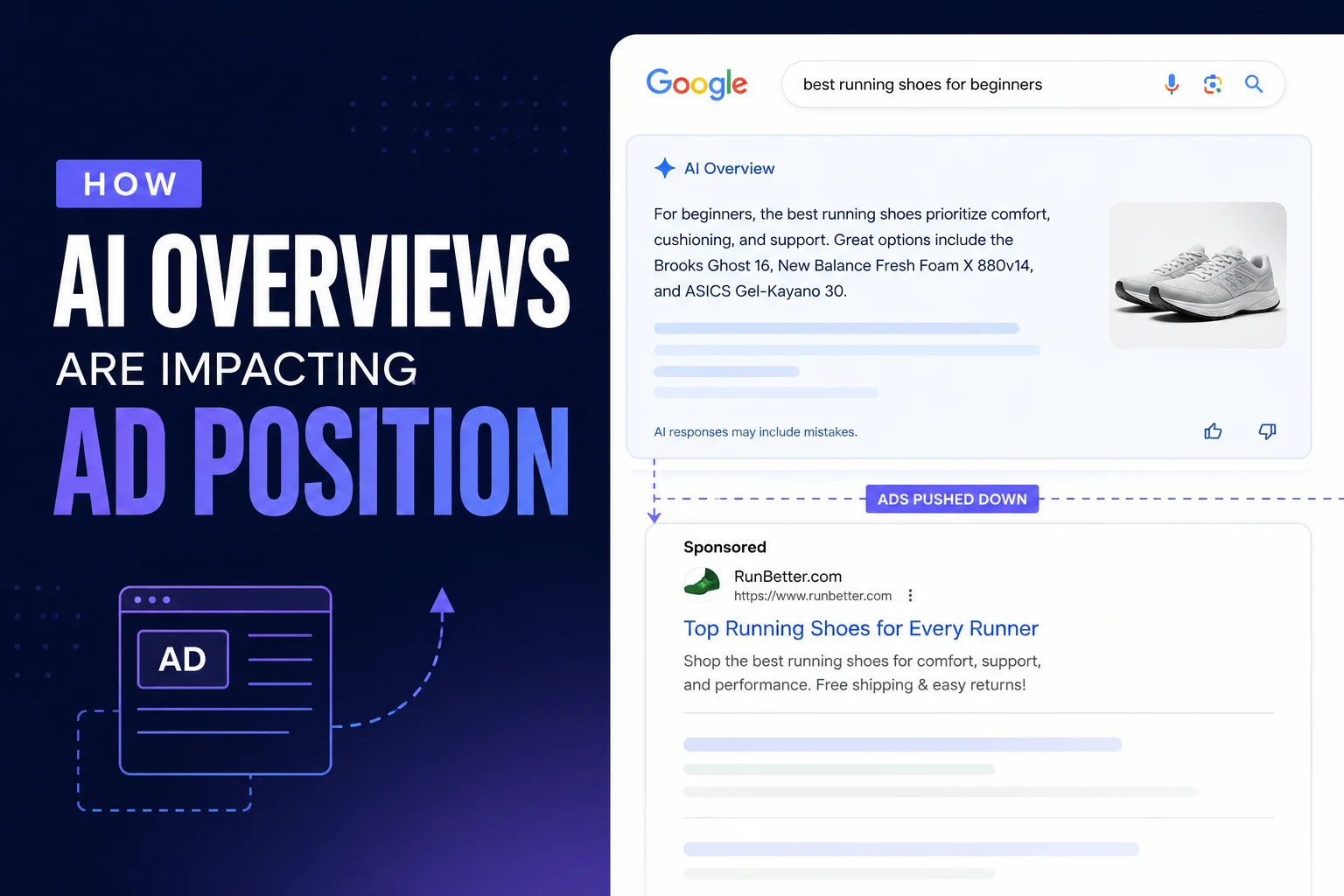
However, the launch of Google AI Overviews has introduced one of the most significant changes in search engine history. Search engine result pages (SERPs) are no longer dominated only by traditional organic listings and paid advertisements. Instead, AI-generated summaries now appear at the very top of search results, reshaping user behavior and redefining how visibility is earned online.
This shift has created new challenges for advertisers, publishers, SEO professionals, and businesses that depend on search traffic for leads, conversions, and revenue. Understanding how AI Overviews affect ad positioning and search visibility is now essential for every business operating in the digital space.
The Evolution of Search Engine Rankings
Search engines have evolved rapidly since the late 1990s. In the early stages of the internet, ranking on Google depended largely on basic keyword optimization and website structure. Over time, Google introduced sophisticated ranking algorithms that focused on relevance, authority, user experience, and content quality.
As competition increased, businesses invested heavily in SEO and paid advertising to secure prime visibility on search engines. Appearing in the top positions of Google search results became directly linked to:
- Increased website traffic
- Better brand recognition
- Higher click-through rates
- More conversions and sales
- Improved business credibility
For advertisers, the fight for the top ad position became a strategic battle. Businesses continuously optimized bidding strategies, quality scores, landing pages, and ad relevance to outperform competitors.
But in 2024, Google introduced a major disruption that changed the traditional search experience entirely.
What Are Google AI Overviews?
Google AI Overviews are AI-generated summaries that appear at the top of search engine result pages. Instead of simply displaying a list of websites, Google now uses artificial intelligence to generate direct answers to user queries by gathering information from multiple trusted sources across the web.
These summaries aim to provide users with immediate answers without requiring them to visit individual websites.
AI Overviews are especially common for:
- Informational searches
- Research-based queries
- Comparative searches
- Educational topics
- Product comparisons
- “How-to” questions
Unlike traditional featured snippets or “People Also Ask” sections, AI Overviews occupy a much larger portion of the screen. In many cases, they dominate the most visible section of the SERP, especially on mobile devices.
This major shift has significantly impacted both organic rankings and paid advertising positions.
How AI Overviews Are Changing Search Result Layouts
The introduction of AI-generated answers has fundamentally changed how search engine results pages are structured.
Previously, users would typically see:
- Paid advertisements
- Organic search results
- Featured snippets
- Related questions
Today, AI Overviews often appear before all of these elements.
This means:
- Organic listings are pushed lower on the page
- Paid advertisements lose prime visibility
- Users receive answers instantly
- Click-through behavior changes dramatically
The impact is particularly noticeable on mobile devices where screen space is limited. Users may now need to scroll significantly before seeing traditional ads or organic listings.
As a result, businesses are no longer competing only against other brands. They are now competing against Google’s own AI-generated responses.
The Impact of AI Overviews on Paid Advertising
Paid search advertising has long depended on visibility. The higher the ad placement, the greater the chances of attracting clicks and conversions.
AI Overviews have disrupted this model in several important ways.
1. Ads Are Being Pushed Lower on SERPs
One of the biggest challenges advertisers face is reduced placement visibility.
Because AI Overviews occupy the top section of the search page, paid ads often appear below the AI-generated content. Even highly optimized campaigns may no longer appear in the first visible section of the page.
This directly impacts user attention and engagement.
2. Reduced Above-the-Fold Visibility
“Above the fold” refers to the portion of the page visible without scrolling.
Previously, top paid ads enjoyed strong above-the-fold exposure. However, AI Overviews now dominate this space.
This is particularly problematic on mobile devices where the visible screen area is smaller. Users may see only the AI summary before needing to scroll further.
Reduced visibility often leads to:
- Lower ad engagement
- Decreased click-through rates
- Reduced traffic quality
- Higher acquisition costs
3. Declining Click-Through Rates (CTR)
Even when ads continue receiving impressions, AI-generated answers can reduce user motivation to click.
Since users often get immediate answers from AI Overviews, they may not feel the need to visit external websites.
This creates a major challenge for advertisers whose campaigns previously depended on informational search queries.
Industries heavily affected include:
- Blogging and publishing
- Educational websites
- Technology reviews
- Health information platforms
- Travel content
- Financial advice websites
As AI Overviews satisfy user intent directly within search results, traditional CTR performance metrics may decline.
4. Increased Competition for Premium Ad Space
As visibility decreases, advertisers compete more aggressively for remaining premium positions.
This creates:
- Higher cost-per-click (CPC)
- More aggressive bidding strategies
- Increased advertising costs
- Lower return on ad spend in some cases
Businesses are now spending more money simply to maintain visibility levels that were previously easier to achieve.
How AI Overviews Are Changing SEO Strategies
SEO strategies are also evolving rapidly because of AI-generated search experiences.
Traditional SEO focused heavily on:
- Keyword optimization
- Backlink building
- Meta tags
- Technical SEO
- Content volume
While these elements remain important, AI-first search requires a stronger emphasis on:
- Topical authority
- User intent satisfaction
- Content clarity
- Experience-based insights
- Semantic relevance
- Structured information
Google’s AI systems prioritize trustworthy, useful, and highly relevant content when generating summaries.
This means brands must create content that demonstrates:
- Expertise
- Authority
- Credibility
- Originality
- Real-world experience
Businesses that continue relying on outdated SEO tactics may struggle to maintain visibility in AI-driven search environments.
Winning in an AI-First Search Environment
Although AI Overviews present challenges, they also create opportunities for businesses willing to adapt.
Success in modern search marketing now depends on a combination of SEO, PPC, branding, and content authority.
Here are some effective strategies for staying competitive.
Focus on High-Intent Keywords
Not every search query triggers AI Overviews equally.
High-intent searches such as:
- Product purchase queries
- Brand searches
- Service-specific searches
- Local business searches
- Transactional queries
often still provide strong opportunities for paid ads and organic listings.
Businesses should focus on keywords with strong commercial intent where users are more likely to convert.
Examples include:
- “Best Digital Marketing Company in Kochi ”
- “buy SEO software”
- “hire PPC expert”
- “book hotel in Dubai”
These searches generally maintain stronger click potential compared to purely informational queries.
Create Content That Complements AI Answers
Instead of fighting AI-generated summaries, businesses should create content that expands on them.
AI Overviews usually provide concise answers. Your content should offer:
- Detailed insights
- Step-by-step guidance
- Real-world examples
- Expert opinions
- Case studies
- Visual explanations
This encourages users to click for deeper information.
The goal is not only visibility but also building trust and authority.
Optimize for Brand Visibility
Strong brands are more resilient in AI-driven search environments.
Users are more likely to click recognizable brands even when AI summaries are present.
Businesses should invest in:
- Brand awareness campaigns
- Consistent content publishing
- Social media authority
- Email marketing
- Community engagement
- Reputation management
Brand familiarity significantly influences user behavior in modern search experiences.
Integrate SEO and PPC Strategies
The future of digital marketing requires a unified strategy.
SEO and PPC should no longer operate independently.
An integrated approach helps businesses:
- Dominate multiple SERP positions
- Improve brand recall
- Increase authority signals
- Capture users at different stages of intent
- Maximize visibility despite AI summaries
High-quality organic content can also influence the sources used in AI-generated summaries.
This means strong SEO may indirectly improve brand exposure even within AI Overviews themselves.
Prioritize User Experience and Content Quality
Google’s AI systems increasingly evaluate content based on usefulness and user satisfaction.
To improve visibility, websites should focus on:
- Fast page speed
- Mobile optimization
- Clear content structure
- Helpful information
- Original insights
- User engagement
- Trust signals
Content designed solely for search engines is becoming less effective.
User-focused content now plays a critical role in search performance.
The Future of Search in an AI-Driven World
AI-powered search is still evolving, and the impact of AI Overviews will continue to grow over the coming years.
Future search experiences may include:
- More conversational search interactions
- Personalized AI-generated answers
- Voice-integrated AI search
- Visual AI search experiences
- Predictive search recommendations
Businesses that adapt early to these changes will have a stronger competitive advantage.
The future of SEO and paid advertising will likely depend less on simply “ranking first” and more on:
- Building authority
- Understanding user intent
- Creating valuable experiences
- Establishing trust
- Providing comprehensive information
Why Adaptability Matters More Than Ever
One of the biggest lessons from the evolution of digital marketing is that search engines constantly change.
Businesses that succeed long term are those that adapt quickly.
AI Overviews are not the end of SEO or paid advertising. Instead, they represent the next stage of search engine evolution.
Brands that continue learning, experimenting, and refining their strategies will remain competitive.
Digital marketers must now think beyond traditional rankings and focus on:
- Search intent
- User engagement
- Cross-channel visibility
- Brand authority
- AI-friendly content structures
The businesses that embrace AI-driven search rather than resist it are more likely to maintain strong online visibility.
Final Thoughts
Google AI Overviews have fundamentally changed the digital marketing landscape. Traditional search result positioning is no longer the sole factor determining online success.
Paid advertisements now face reduced visibility, organic traffic patterns are shifting, and user behavior is evolving rapidly.
However, opportunities still exist for businesses that prioritize quality, relevance, and user-focused experiences.
The future of search belongs to brands that combine strong SEO foundations, strategic PPC campaigns, authoritative content, and a deep understanding of user intent.
As AI continues transforming search engines, adaptability will become the most valuable digital marketing skill. Businesses that evolve with these changes will continue to thrive in an increasingly AI-first search ecosystem.

